
Why Are Bugs Trying to Get Inside Your Maine Home This Fall?
As September moves along in Maine, open windows start closing, nights get cooler, and homeowners begin thinking about everything that needs to get done before winter.
Unfortunately, a lot of pests are thinking ahead, too.
Every fall, we hear from homeowners across Central and Coastal Maine who notice insects gathering on sunny exterior walls, crawling around windows, or occasionally appearing inside rooms where they weren’t a problem all summer.
In many cases, these pests aren’t coming indoors because they’re looking for food or trying to infest your kitchen. They’re looking for a protected place to spend the winter.
At Advanced Pest Solutions, we deal with this every fall. Here are some of the pests Maine homeowners are most likely to notice as temperatures start dropping.
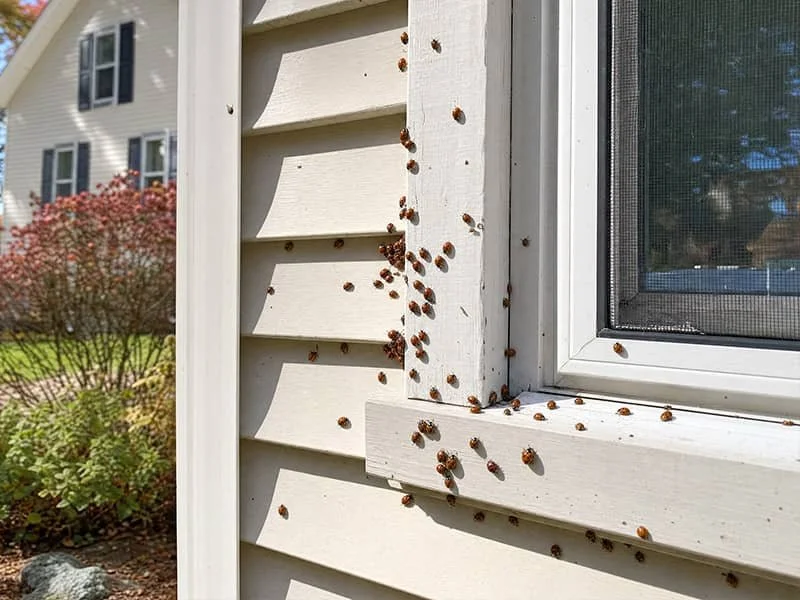
Asian Lady Beetles, or the “Ladybugs” Covering Your House
One of the most noticeable fall invaders is the multicolored Asian lady beetle, commonly just called an Asian lady beetle or ladybug.
During the warmer months, these beetles are beneficial predators that feed on aphids and other plant pests. When cooler weather arrives, however, adults start looking for protected places where they can overwinter.
That can bring large numbers of them to homes.
You may see them gathering on the sunny side of the house, around windows and doors, or working their way into small openings around siding and trim. Once inside, they can settle into wall voids, attics, and other sheltered spaces.
Asian lady beetles don’t reproduce or feed inside homes, and they aren’t going to damage the structure. But they can become a major nuisance when dozens—or sometimes many more—enter a building. They can also release a yellowish defensive fluid when disturbed or crushed, which may stain some surfaces.
During the coldest part of winter, these beetles generally remain inactive in protected areas. On sunny winter days, however, warmth can bring some of them out of dormancy, which is why homeowners may occasionally notice them around windows or light fixtures even months after they first entered.
If your house seems to become a ladybug gathering place every fall, you’re definitely not the only Maine homeowner dealing with them.
Boxelder Bugs Are Looking for Winter Shelter Too
Boxelder bugs are another familiar sight around Maine homes in the fall.
These black insects with reddish-orange markings spend much of the warmer season outdoors, often around boxelder and maple trees. As temperatures cool, adults begin looking for protected overwintering locations.
Homes provide plenty of possibilities.
They may congregate on warm exterior walls before squeezing into gaps around windows, doors, siding, soffits, or other openings. Once they’ve found shelter inside the structure, they typically become inactive during cold weather. A warm winter day or the return of spring temperatures may bring some of them out of hiding.
As is the case with Asian lady beetles, boxelder bugs aren’t eating your house or multiplying inside it. The problem is usually the number that can enter, and the occasional activity homeowners notice later in the season.
Stink Bugs Can Become Unwelcome Fall Houseguests
Stink bugs are another group of insects Maine homeowners may encounter as fall approaches, including the brown marmorated stink bug.
Their strategy is similar: find a sheltered location before cold weather settles in.
That can mean slipping into homes through surprisingly small openings and spending the winter protected inside walls, attics, or other hidden areas. Once temperatures drop, they generally become much less active. On a sunny or unusually warm winter day, however, a few may become active again and show up around windows or other indoor areas.
And yes, the name is deserved.
When stink bugs are crushed or disturbed, they can release a strong odor. That’s one reason squashing the ones you find indoors isn’t our favorite strategy.
Brown marmorated stink bugs have been documented overwintering in buildings across Maine. At the time of publication, we haven’t started seeing them in Central Maine yet this fall, although they’re already showing up farther north.
We offer a separate fall pest treatment for stink bugs, which is not included in our residential pest control plans. If you start noticing them gathering on your home or elsewhere around your property, give us a call. Treating them during the fall gives us an opportunity to address the problem while they’re looking for places to spend the winter.
That “Stink Bug” Might Actually Be a Western Conifer Seed Bug
Here’s another insect we frequently need to distinguish from stink bugs: the western conifer seed bug.
If you’ve seen a fairly large brown bug slowly crawling around a window in October—or occasionally buzzing across the room during a warm spell—you may have encountered one.
Western conifer seed bugs live outdoors and feed on conifers such as pines, spruces, and hemlocks. Toward the end of summer and into early fall, adults begin seeking warm, protected places to overwinter.
Sometimes, that place is your house.
Once inside, they generally remain inactive through the coldest part of winter. A sunny window, indoor heat, or an unusually warm day may cause an individual bug to become active again.
They don’t damage the wood in your home and are primarily a nuisance indoors. They can, however, produce an unpleasant odor when disturbed or crushed. Their loud buzzing flight can also make them seem a lot more threatening than they actually are.
Cluster Flies May Be Hiding in the House Before You Notice Them
You might not notice cluster flies arriving at all.
In late summer and fall, adult cluster flies look for protected places such as attics, wall voids, lofts, and other cavities where they can spend the winter.
Then, weeks or months later, homeowners may see sluggish flies around windows—sometimes during a warm spell in winter or as spring approaches.
Cluster flies look similar to house flies but are generally a little larger. Unlike house flies, they aren’t attracted to garbage or reproducing in spoiled food inside your home. Their larvae actually develop as parasites of earthworms outdoors.
If cluster flies show up inside year after year, the real issue often began months earlier when they found their way into the structure.
Spiders May Be More Noticeable This Time of Year Too
Fall is also a time when homeowners tend to notice more spiders and webs around the house.
Some spiders become more conspicuous as they mature in late summer and fall, while others may end up indoors accidentally or while following insect prey. If your home has plenty of insects finding their way inside, it also gives spiders something to hunt.
We covered this topic in more detail in our guide to spiders in Maine.
And Yes, Mice Are Starting to Think About Coming Indoors
Insects aren’t the only pests affected by the change in seasons.
As fall progresses, mice also take advantage of gaps around foundations, utility penetrations, garage doors, siding, and other openings to access homes.
We won’t go too far into mice here because we’ve already covered them in more detail. If you want to know what to watch for and how to reduce the chances of rodents moving in as temperatures drop, read our guide to avoiding rodent problems this fall.
Why Fall Pest Prevention Works Best Before They’re Inside
Some fall-invading insects spend the winter tucked away in wall voids, attics, and other protected areas of a home. On a sunny or unusually warm winter day, a few may become active and suddenly show up around windows or other indoor areas.
Other pests, including mice, can remain active throughout the winter once they’re inside.
That’s why we prefer to address fall pest activity before insects and rodents have had a chance to settle into the structure.
Our Approach to Fall Pest Control in Maine
At Advanced Pest Solutions, we’re a local, family-operated Maine pest control company, and we know how much pest activity changes with our seasons.
We also use an Integrated Pest Management, or IPM, approach. That means pest control isn’t simply about applying a product everywhere and calling it a day.
We look at the pest involved, where activity is occurring, how pests may be getting in, and conditions around the property that could be contributing to the problem. From there, we recommend an appropriate solution for that home.
For homeowners who would rather not wait for the next pest problem to arise, our home pest control plans provide ongoing protection against common household pests and rodents.
Our Premium Care program includes year-round protection, interior and exterior pest treatments, seasonal service visits, and a no-charge service guarantee for covered pests between scheduled services.
Fall is a particularly good reminder of why ongoing pest control makes sense in Maine. The pests may change with the seasons, and many become inactive during the coldest months, but there is rarely a time of year when nothing is trying to get into the house.
Get Ahead of Fall Pests With Advanced Pest Solutions
If ladybugs are covering the sunny side of your house, stink bugs are appearing around the windows, or other pests are making their way indoors, give Advanced Pest Solutions a call.
We help homeowners throughout Central and Coastal Maine manage seasonal pest problems using an IPM approach backed by decades of local experience. Contact us today to learn more about our home pest control plans and find the right option for your property.
And while we’re talking about changing seasons, we’re finishing up our seasonal mosquito and tick treatments this month. Our program runs from April through September, so if mosquitoes and ticks made your yard difficult to enjoy this year, now is a great time to remember us for next spring. Getting on the schedule early means you’ll be ready when Maine’s next mosquito and tick season gets underway.