
Blacklegged Ticks (Deer Ticks)
Understanding Blacklegged Ticks In Maine
Blacklegged ticks, commonly known as deer ticks, are among the most concerning pests found in Maine. Unlike nuisance insects that simply become an annoyance, deer ticks are known carriers of several diseases that can affect both people and pets. As tick populations continue to grow throughout the state, homeowners, outdoor enthusiasts, and pet owners are increasingly likely to encounter these tiny parasites.
At Advanced Pest Solutions, we help property owners throughout Central and Coastal Maine identify tick activity, reduce tick habitat, and protect outdoor spaces from these disease-carrying pests.
How To Identify A Deer Tick
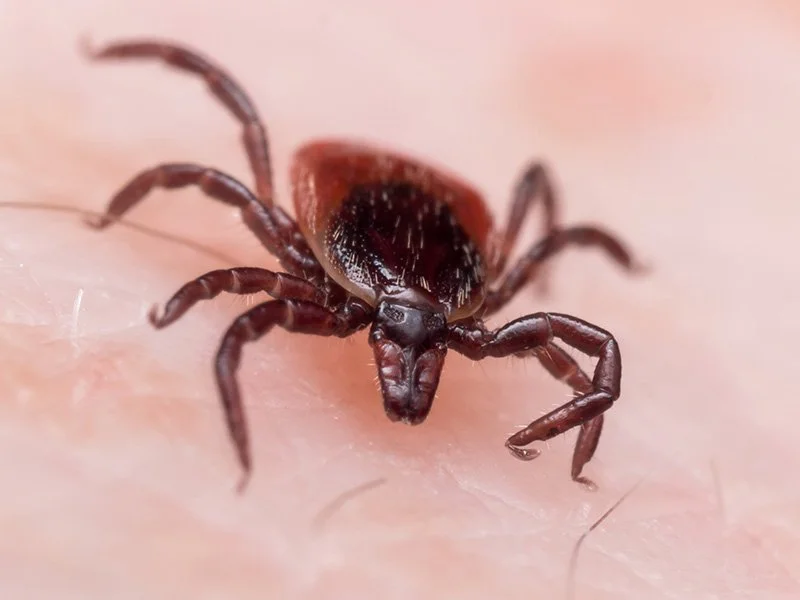
Deer ticks are significantly smaller than many people realize. In fact, younger life stages are often no larger than a poppy seed, making them difficult to spot before they attach to a host.
Deer tick characteristics include:
Reddish-brown body
Dark legs
Eight legs as adults and nymphs
Oval-shaped body
Females have a dark shield behind the head and a reddish abdomen
Nymphs are extremely small and difficult to detect
Adult female deer ticks are typically the easiest to identify because of their distinctive two-toned appearance.
Why Deer Ticks Are A Concern In Maine
Deer ticks are best known for transmitting Lyme disease, but they can also spread other illnesses.
Diseases associated with deer ticks include:
Anaplasmosis
Babesiosis
Powassan virus
Not every tick carries disease, but Maine consistently reports some of the highest rates of tick-borne illnesses in the country, making prevention and awareness especially important for homeowners.
When Are Deer Ticks Most Active In Maine?
Many people assume ticks disappear during colder weather, but deer ticks can remain active whenever conditions allow.
Spring
As temperatures begin warming, nymph-stage deer ticks become increasingly active. Because these immature ticks are extremely small and difficult to detect, spring is often considered one of the highest-risk periods for tick exposure.
Summer
Tick activity continues throughout the summer months, especially in wooded areas, tall grass, and locations with abundant wildlife. Homeowners who spend time outdoors often encounter ticks while gardening, hiking, or doing yard work.
Fall
Adult deer ticks become highly active during the fall. Many homeowners are surprised to discover that tick activity often increases again after summer, particularly along wooded property edges, hiking trails, and recreational areas.
Winter
Unlike mosquitoes, deer ticks may not disappear entirely during winter. Adult ticks can remain active during mild periods whenever temperatures rise above freezing and snow cover is absent.
Where Deer Ticks Live
Deer ticks do not jump or fly. Instead, they wait on vegetation and attach to animals or people that brush against them.
Common tick habitats include:
Wood lines
Leaf litter
Tall grass
Overgrown vegetation
Stone walls
Brush piles
Woodland trails
Areas where lawns meet woods
Properties bordering forests or containing dense vegetation often provide ideal habitat for ticks throughout much of the year.
How Deer Ticks End Up On People & Pets
Deer ticks rely on hosts to move through their life cycle. White-footed mice, deer, birds, and other wildlife help transport ticks throughout the environment.
Ticks commonly reach people and pets when they:
Walk through tall grass
Spend time near wooded edges
Hike on trails
Work in gardens
Explore brushy areas
Travel through leaf-covered ground
Because ticks cannot jump or fly, direct contact with vegetation is usually how an encounter begins.
Signs You May Have Deer Ticks On Your Property
Ticks are rarely noticed until they are found on a family member or pet. However, several signs and indicators can suggest elevated tick activity around a property.
Ticks found on pets
Ticks discovered on clothing after spending time outdoors
Frequent wildlife activity
Properties bordering wooded areas
Dense vegetation around the yard
Leaf litter accumulation
Tick encounters during outdoor activities
Many Maine homeowners first realize they have a tick problem on their properties after repeatedly finding ticks on themselves, family members, or pets.
Why Deer Tick Populations Continue To Grow In Maine
Several factors have contributed to increasing tick activity across Maine over the last several decades.
Expanding deer populations, abundant wildlife hosts, favorable habitat, and changing environmental conditions have all helped deer ticks establish themselves across larger portions of the state. Today, ticks are common in many areas where they were once considered relatively uncommon.
Properties with wooded surroundings, stone walls, dense vegetation, and frequent wildlife traffic often experience the greatest tick pressure.
How To Help Reduce Tick Habitat Around Your Home
While no property can be made completely tick-free, making your property less tick-friendly can help limit tick activity. Helpful tick prevention tips include:
Keep the grass trimmed
Remove excess leaf litter
Clear brush and overgrowth
Create separation between lawns and wooded areas
Discourage wildlife activity when possible
Maintain walking paths and recreational areas
Reduce ground-level vegetation near gathering spaces
Inspect pets regularly for ticks
Regular property maintenance can help reduce the areas where ticks hide and wait for hosts.
Professional Tick Control In Maine
Because deer ticks spend much of their time hidden in vegetation and transitional areas around a property, professional treatment is often the most effective way to reduce tick populations.
Advanced Pest Solutions provides seasonal mosquito and tick control services throughout Central and Coastal Maine, including communities such as Camden, Gardiner, Belgrade Lakes, and Greene. Our process begins with a detailed property inspection to identify tick hiding areas and evaluate activity levels. In some situations, we may perform a tick drag to better assess the severity of the problem.
From April through September, our team performs targeted treatments focusing on the areas where ticks are most likely to live and travel, including wooded transitions, overgrowth, shrubs, fence lines, ornamental plantings, trees, and areas beneath decks.
If you're concerned about deer ticks around your home, camp, or outdoor living areas, contact Advanced Pest Solutions to schedule a tick control evaluation.
Deer Tick FAQs
Why are blacklegged ticks called deer ticks?
The name "deer tick" comes from the important role white-tailed deer play in the tick's life cycle. Adult ticks commonly feed on deer before reproducing.
Are deer ticks and dog ticks the same thing?
No. Deer ticks and American dog ticks are different species. Deer ticks are the primary carriers of Lyme disease in Maine.
Are deer ticks active at night?
Ticks do not follow a daily activity cycle like mosquitoes. They remain present in a suitable habitat and wait for a host to pass by.
Can I get Lyme disease from every deer tick bite?
No. Not every deer tick carries Lyme disease, and transmission does not occur from every bite.
Why are nymph deer ticks considered so dangerous?
Nymphs are extremely small and often go unnoticed, giving them more opportunity to remain attached long enough to potentially transmit disease.
Schedule Your Deer Tick Evaluation Today!
While it’s impossible to 100% eliminate mosquitoes, Advanced Pest Solutions’ services will significantly reduce mosquito populations on your property. Don’t wait until your family is covered in mosquito bites, contact us today to schedule service!
*Excludes charges for additional equipment if applicable