
Yellow Jackets
Identifying Eastern Yellow Jackets in Maine
Eastern yellow jackets are among the most aggressive stinging insects found around Maine homes. Unlike honey bees, yellow jackets can sting multiple times and often become highly defensive when their nest is disturbed. They are especially active during late summer and early fall, when growing colonies begin searching for sugary foods and proteins around patios, outdoor gatherings, garbage cans, and gardens.
At Advanced Pest Solutions, we help homeowners throughout Central and Coastal Maine locate the source of yellow jacket activity and eliminate nests before they become a hazard for families, pets, and visitors.
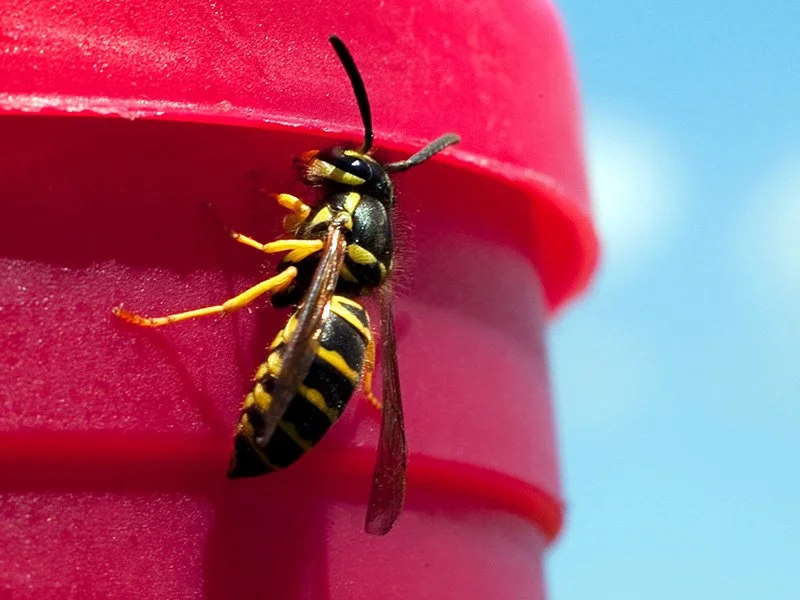
How to Identify Eastern Yellow Jackets
Eastern yellow jackets are often mistaken for honey bees, but they have a much sleeker appearance and brighter yellow-and-black markings.
Eastern yellow jacket characteristics include:
About ½ inch long
Bright yellow and black striped body
Narrow waist
Smooth body with very little hair
Folded wings when at rest
Fast, direct flight
Unlike bees, yellow jackets do not lose their stinger after attacking and are capable of stinging repeatedly.
Why Yellow Jackets Become More Aggressive in Late Summer
Many homeowners notice yellow jackets becoming far more aggressive in August and September.
During spring and early summer, workers spend most of their time collecting insects to feed developing larvae. As the colony reaches its maximum size later in the season, food sources change. Adult yellow jackets begin searching for sugary drinks, fruit, desserts, pet food, and garbage, bringing them into much closer contact with people.
By late summer, colonies may contain several thousand workers, making accidental nest disturbances much more dangerous.
Where Yellow Jackets Build Nests
Eastern yellow jackets most commonly build nests underground.
Common nesting locations include:
Abandoned rodent burrows
Landscape beds
Beneath shrubs
Along wooded edges
Under retaining walls
Around tree roots
Beneath wood piles
Occasionally inside wall voids or other protected cavities
Because the nest entrance may only be an inch or two wide, homeowners often do not realize a nest is present until they accidentally mow over it or walk nearby.
Signs You May Have a Yellow Jacket Nest
Yellow jacket nests often remain hidden until worker activity becomes noticeable.
Signs of a nearby nest include:
Numerous yellow jackets flying low over the lawn
Repeated activity in the same location
Insects entering and leaving a small hole in the ground
Increased activity around trash cans or outdoor eating areas
Multiple yellow jackets appearing whenever lawn equipment is used nearby
If you notice repeated traffic to one location, avoid disturbing the area until the nest can be evaluated by a trained professional.
When Are Yellow Jackets Most Active in Maine?
Spring
Overwintered queens emerge and begin building small paper nests while raising the first generation of workers.
Summer
Colonies expand rapidly as worker numbers increase. Yellow jackets spend much of the season hunting insects and collecting food for developing larvae.
Late Summer & Early Fall
This is when yellow jacket activity is at its peak. Large colonies aggressively defend their nests while workers search for sweet foods and drinks around homes and outdoor gatherings.
Winter
The colony dies once sustained freezing temperatures arrive. Only newly mated queens survive the winter by sheltering beneath bark, logs, leaf litter, or other protected locations before starting new colonies the following spring.
Why DIY Yellow Jacket Removal Can Be Dangerous
Because yellow jacket nests are often hidden underground, homeowners may unknowingly disturb thousands of defensive insects, leading to numerous stings within seconds.
Store-bought aerosol products may kill some workers but often fail to eliminate the entire colony.
Professional treatment helps ensure the colony is eliminated while minimizing the risk of stings.
Professional Yellow Jacket Control in Maine
Yellow jacket nests can be difficult to locate and dangerous to approach without the right equipment and experience. Advanced Pest Solutions identifies the nesting area and uses targeted treatment to eliminate the colony while reducing the risk of stings.
Yellow jackets and other common stinging insects are also covered under our residential pest control plans, along with a variety of other pests that may become active in and around your home. Ongoing service helps prevent many covered pest problems before they become established while giving our technicians the opportunity to address yellow jackets, other stinging insects, and additional pests when activity does occur.
If you have discovered a yellow jacket nest or are seeing increased activity around your home, contact Advanced Pest Solutions to schedule service or learn more about our residential pest control plans.
Yellow Jacket FAQs
Are yellow jackets common around Maine camps and seasonal homes?
Yes. Camps and seasonal homes often have sheltered areas, wooded surroundings, and undisturbed ground suitable for nesting. Activity may go unnoticed until the property is opened for the season or someone begins working around the yard.
Do yellow jackets damage homes?
They usually do not cause the kind of structural damage associated with carpenter ants or rodents. However, yellow jackets nesting inside a wall void can sometimes chew through drywall and may also enlarge nesting space in wood that is already soft, rotted, or otherwise deteriorated.
Can yellow jackets sting dogs and other pets?
Yes. Dogs may be stung after sniffing, digging near, or stepping on a ground nest. Stings around the mouth or face and signs of an allergic reaction require prompt veterinary attention.
Are yellow jackets beneficial?
Yellow jackets help control caterpillars, flies, and other insects that they collect for their young. A nest away from people may not cause a problem, but one near a home, walkway, play area, or frequently used part of the yard can become dangerous.
Why are yellow jackets a bigger concern for some Maine homeowners?
People who are allergic to stings, families with young children, pet owners, and anyone working near an active nest face a greater risk. Hidden ground nests are especially concerning because they can be disturbed without warning.