
House Mice
Identifying House Mice in Maine
House mice are common rodents in Maine and can become a problem inside homes, camps, garages, sheds, and other structures. Mice can find their way indoors at any time of year, but they tend to become more noticeable in fall, when cooling nights send them looking for warm, protected places with food and nesting material.
Once inside, they can settle into areas people rarely see, and their small size lets them use openings that are easy to overlook.
At Advanced Pest Solutions, we help homeowners throughout Central and Coastal Maine identify mouse activity and address the conditions allowing these rodents to live in and around their homes.
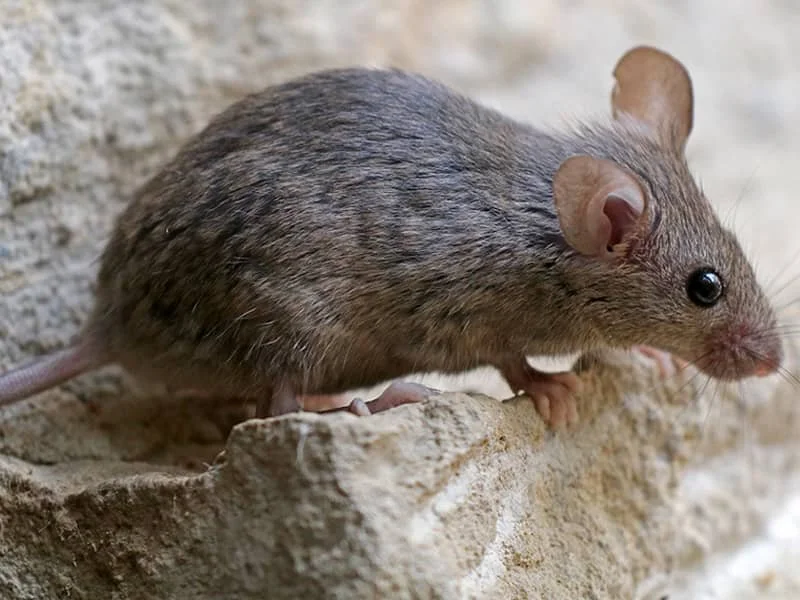
What Do House Mice Look Like?
House mice are small, slender rodents. Their size and proportions help distinguish them from larger rodents such as young Norway rats.
House mouse characteristics include:
Body about 2½ to 3¾ inches long, not including the tail
Tail about as long as the body or slightly longer, thin, and sparsely haired
Grayish-brown fur, although coloring can vary
Lighter gray to cream-colored belly
Large ears in proportion to the head
Pointed snout
Small, dark eyes
Young rats can sometimes be mistaken for adult mice, but house mice have a smaller head, proportionally larger ears, and a thinner tail.
Maine is also home to other mice, including deer mice and white-footed mice, which can look similar at a glance. Unlike those species, house mice are grayish-brown without a sharply white belly and feet, and their tail is a single color.
Signs of House Mouse Activity
You may never see a mouse even when one is living inside your home. House mice are primarily active after dark and often stay hidden during the day.
Common signs of mouse activity include:
Small, dark, rod-shaped droppings
Gnaw marks on food packaging, wood, or other materials, including chewed-open packages
Scratching or scurrying sounds inside walls or ceilings
Shredded paper, fabric, insulation, or other nesting material
Greasy smudges along frequently traveled routes
A stale or musky odor when activity is significant
Mouse sightings, particularly at night
Finding several of these signs together is a good indication that mice are active nearby.
Why House Mice Come Inside
A home offers a house mouse three things: shelter, food, and places to nest.
Mice can enter around foundations, utility penetrations, garage doors, vents, damaged building materials, and other small gaps. A house mouse can squeeze through an opening roughly ¼ inch wide, so a gap that doesn't look significant to a homeowner may still provide access. In Maine, mudrooms, attached garages, woodsheds, and older foundations with gaps or cracks are all worth a close look.
Once inside, pantry foods, pet food, bird seed, and crumbs provide a reliable food supply, while quiet areas with insulation, cardboard, paper, and fabric make suitable nesting sites. With Maine's long winters, a heated structure is especially valuable shelter.
Where House Mice Hide Indoors
House mice stay close to food, shelter, and cover, and often use concealed spaces that let them travel without crossing open areas.
Inside Maine homes, mice may be found:
Behind kitchen appliances
Inside cabinets and pantries
Within wall voids
In attics
In basements and crawl spaces
Around stored boxes and belongings
Inside garages
Near furnaces, water heaters, and utility areas
Beneath or behind built-in cabinets
Camps and seasonal homes can be especially attractive, since activity can continue unnoticed while the property sits empty.
House Mouse Activity Through Maine's Seasons
Spring
Mice that spent the winter indoors stay active inside. As snow melts, mice living outdoors also gain access to more food and cover around foundations, woodpiles, and outbuildings.
Summer
In warm weather, mice can live outdoors near fields, gardens, sheds, wood piles, and other protected areas. Indoor problems can still occur wherever food and nesting sites are readily available, and camps opened for the season may show signs of activity that went on while the building was empty.
Fall
Fall is a key time for mouse activity around Maine homes. As nights turn cold in late September and October, mice take advantage of openings that lead into warmer, protected structures. Homes, camps, garages, and seasonal properties can all provide shelter.
Winter
House mice do not hibernate. Once established in a heated structure, they can remain active through a Maine winter, feeding, nesting, and reproducing indoors.
Can House Mice Damage Your Home?
Despite their small size, house mice can cause significant problems once established indoors.
Their front teeth grow continuously, so mice gnaw regularly, chewing cardboard, plastic, wood, insulation, and other materials. They can also damage electrical wiring, which can increase the risk of a fire. Wiring with signs of rodent damage should be evaluated by a qualified electrician.
Mice can also contaminate food and food-preparation areas with droppings and urine, and nesting can ruin insulation and stored belongings. Addressing activity early helps limit the damage and contamination.
Are House Mice a Health Concern?
House mice can contaminate surfaces and stored food as they move through a home. Their droppings, urine, saliva, and nesting material can carry microorganisms, and rodents can also bring fleas, mites, and other parasites into structures.
Sweeping or vacuuming dry droppings and nesting material can send contaminated particles into the air, so cleanup should be done carefully.
How to Help Prevent House Mice
Reducing access to food and shelter makes a property less attractive to mice, and closing potential entry points helps keep them out.
Store pantry foods in sturdy, sealed containers
Keep pet food and bird seed securely stored, and don't leave pet food out overnight
Clean up crumbs and spills
Reduce clutter in garages, basements, and storage areas
Keep firewood away from the structure when practical
Check door sweeps and garage doors for gaps
Look for openings around pipes, wires, vents, and utility penetrations
Repair damaged screens and exterior building materials
Because mice need so little space to get in, a careful inspection is often necessary to find every potential access point.
Professional House Mouse Control in Maine
A mouse problem is about more than the rodent you happen to see. Advanced Pest Solutions looks for evidence of activity, potential entry points, nesting areas, and other conditions that may be contributing to the problem.
House mice are also among the pests covered by our residential pest control plans. Ongoing service gives our technicians opportunities to identify conditions that could contribute to rodent problems and address covered mouse activity when it occurs.
If you've found mouse droppings, heard scratching in the walls, or spotted a mouse inside your home or camp, contact Advanced Pest Solutions to schedule service or learn more about our residential pest control plans.
House Mouse FAQs
How can I tell mouse droppings from rat droppings?
Mouse droppings are small, roughly ⅛ to ¼ inch long, and rod-shaped with pointed ends. Rat droppings are noticeably larger, so the size of what you find can help indicate which rodent is present.
Why do I keep finding droppings in the same area?
Mice tend to follow familiar routes between nesting sites and food sources. Repeated droppings in one spot often point to a regularly used pathway rather than random activity.
Will mice leave on their own once the weather warms up?
Unlikely. As long as a structure offers food, shelter, and warmth, mice that have settled in have little reason to leave, and they can continue breeding indoors.
Can house mice live in a home without a nearby water source?
Yes. House mice get much of the moisture they need from food, so they can survive indoors without regular access to standing water.