
Carpenter Ants
Carpenter Ant Identification Guide For Maine Homeowners
Carpenter ants are common wood-damaging insects found in Maine homes, camps, and businesses. These large black ants are frequently spotted foraging in kitchens, bathrooms, basements, and around foundations during spring and summer. While many homeowners dismiss them as harmless ants, carpenter ants can cause structural damage over time by tunneling through wood to create nesting galleries.
At Advanced Pest Solutions, we help property owners throughout Central and Coastal Maine identify, prevent, and control carpenter ant infestations before they become serious problems.
What Do Carpenter Ants Look Like?
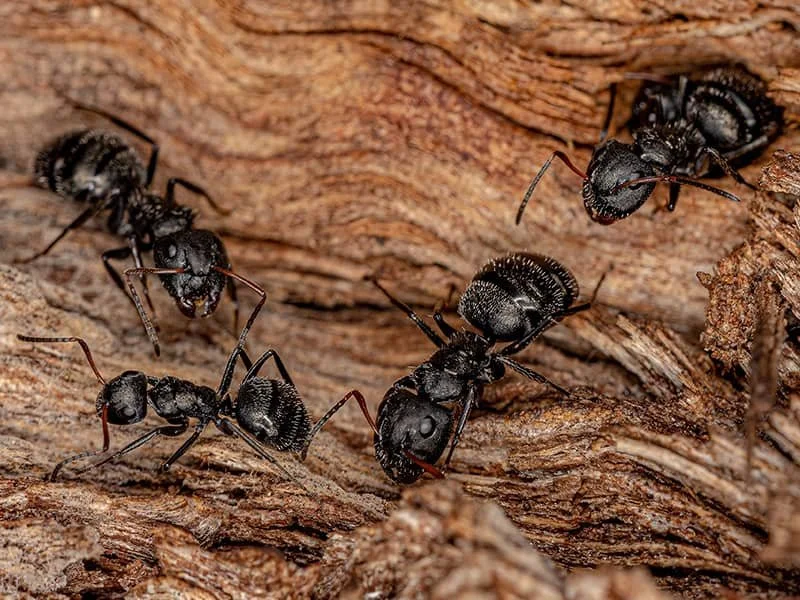
Carpenter ants are among the largest ants found in Maine. Worker ants typically range from ¼ to ½ inch long and are most often black, although some may have reddish coloration.
Carpenter ant characteristics include:
Large body size
Black or black-and-red coloring
Bent antennae
Narrow, pinched waist
Rounded thorax
Winged swarmers during spring
Homeowners often notice carpenter ants crawling along countertops, around sinks, near windows, or across floors at night while they search for food and moisture.
Signs Of Carpenter Ant Activity
Seeing one carpenter ant indoors does not always mean you have an infestation, but repeated sightings can indicate a nearby nest or satellite colony.
Common signs of carpenter ants include:
Large black ants inside the home
Ant trails along walls, pipes, or foundations
Increased activity at night
Small piles of sawdust-like debris called frass
Rustling noises inside walls or ceilings
Winged ants indoors during spring
Moist or damaged wood around the structure
Because carpenter ants prefer damp or decaying wood, they are often associated with moisture problems inside the home.
When Are Carpenter Ants Most Active In Maine?
Carpenter ants remain active for much of the year, but activity levels often increase during warmer months.
Spring
Spring is when many homeowners first notice carpenter ants indoors. As temperatures warm up and colonies become active again, carpenter ants begin foraging more aggressively for food and moisture. Winged reproductive ants, often called swarmers, may also emerge during the spring as mature colonies expand and establish new nesting sites.
Summer
Summer is typically the peak carpenter ant season in Maine. Warm temperatures and increased humidity create ideal conditions for foraging activity, especially during the evening and nighttime hours. Homeowners may notice ants around kitchens, bathrooms, basements, decks, or exterior foundations during this time of year.
Fall
As temperatures begin cooling down, carpenter ants may continue searching for food and moisture inside homes and other structures. Colonies that have already established themselves indoors often remain active well into the fall months.
Winter
Although outdoor activity slows significantly during winter, carpenter ants can remain active inside heated homes, wall voids, crawl spaces, and other protected areas. Winter sightings indoors may indicate an established nest somewhere within the structure.
Where Carpenter Ants Nest
Carpenter ants establish nests both outdoors and indoors. In Maine, wooded properties, older homes, camps, and coastal environments provide ideal nesting conditions.
Outdoor nesting sites may include:
Tree stumps
Dead or rotting trees
Firewood piles
Landscape timbers
Fallen logs
Indoor nesting areas may include:
Wall voids
Crawl spaces
Attics
Window and door frames
Around chimneys
Behind dishwashers or tubs
Water-damaged wood
Carpenter ants often create satellite colonies inside structures while maintaining a larger parent nest outdoors.
Why Carpenter Ants Invade Maine Homes
Maine’s climate and environment create ideal conditions for carpenter ants. Homes surrounded by trees, exposed to excess moisture, or built with aging wood materials are especially vulnerable to infestations. Carpenter ants are strongly attracted to damp or decaying wood, which is why leaking roofs, plumbing issues, and moisture problems in basements or crawl spaces often contribute to activity indoors. Coastal humidity can also create favorable nesting conditions, particularly in waterfront homes and seasonal camps.
Outdoor conditions around the property can also play a role. Firewood stacked against the home, tree branches touching the structure, and rotting stumps or decaying wood near the foundation can all encourage carpenter ants to move closer to the building and eventually inside. Because many Maine homes are located in wooded areas, carpenter ants often establish outdoor nests nearby before expanding into the structure itself.
Can Carpenter Ants Damage Your Home?
Yes. Carpenter ants tunnel through wood to create smooth galleries where they live and expand their colonies. Over time, this activity can weaken structural wood and contribute to costly repairs if left untreated.
Signs of possible carpenter ant damage include:
Sticking doors or windows
Sagging floors or ceilings
Bulging walls
Hollow-sounding wood
Visible wood deterioration
Unlike nuisance ants, carpenter ants can cause structural damage if infestations are left untreated.
Why DIY Carpenter Ant Control Often Fails
Many homeowners try to get rid of carpenter ants with sprays, traps, or store-bought ant products, only to see the ants return days or weeks later. That’s because the ants visible inside the home are often only a small part of a much larger infestation hidden in walls, crawl spaces, attics, or water-damaged wood.
Carpenter ants commonly establish satellite colonies throughout a structure, making it difficult to eliminate the problem without locating the source of the activity. While DIY products may temporarily reduce the number of ants you see, they rarely address the hidden nests or the conditions attracting carpenter ants in the first place.
How To Help Prevent Carpenter Ants
Reducing moisture and eliminating wood damage are two of the most important steps homeowners can take to help prevent carpenter ants.
Helpful prevention tips include:
Repair leaking roofs and plumbing
Replace rotting wood
Reduce crawl space moisture
Improve ventilation in damp areas
Store firewood away from the structure
Trim branches away from the home
Seal gaps around doors, windows, and utility lines
Remove dead trees and stumps when possible
Routine inspections can also help identify carpenter ant activity early before significant damage occurs.
Professional Carpenter Ant Control In Maine
Because carpenter ants often nest inside walls, damp wood, crawl spaces, and other hidden structural areas, completely eliminating an infestation can be challenging without professional treatment. Visible ants are often only a small part of a much larger colony, and satellite nests may spread throughout the structure over time if the problem is not properly addressed.
Advanced Pest Solutions provides professional carpenter ant control for homes and businesses throughout Central and Coastal Maine, including Belgrade Lakes and Port Clyde. With over 35 years of industry experience, our locally owned and operated team understands the unique pest pressures Maine property owners face and develops targeted treatment plans designed to locate and eliminate carpenter ant activity at the source.
Whether you’ve noticed carpenter ants indoors, discovered winged ants around your property, or want peace of mind that your home is protected, we’re here to help.
If you suspect carpenter ants are active in your home or business, contact Advanced Pest Solutions today to schedule a carpenter ant evaluation.
Carpenter Ant FAQs
Are carpenter ants more common in older homes?
Older homes may be more vulnerable to carpenter ants because of aging wood, past moisture issues, and small structural gaps that make it easier for ants to establish nests.
Can carpenter ants infest new homes?
Yes. Even newer homes can experience carpenter ant activity if moisture issues, nearby wooded areas, or accessible nesting sites are present.
Do carpenter ants bite?
Carpenter ants can bite if disturbed, but they are not considered aggressive toward people. Larger ants may also spray a mild form of formic acid that can cause minor irritation.
Why am I seeing winged carpenter ants in my home?
Winged carpenter ants, also called swarmers, are reproductive ants that emerge from mature colonies to establish new nests. Seeing them indoors may indicate an active nest somewhere inside the structure.
Can carpenter ants infest seasonal camps or cabins?
Absolutely. Seasonal homes, camps, and cabins can be especially attractive to carpenter ants because of surrounding wooded areas, moisture exposure, and periods of limited activity inside the structure.
How long does it take carpenter ants to cause damage?
Carpenter ant damage usually develops gradually over time, but large or long-established colonies can eventually weaken wood and contribute to costly structural repairs if left untreated.
Schedule Your Carpenter Ant Evaluation Today!
If you’ve noticed carpenter ants foraging in or around your home, have witnessed winged ants on your property, or simply want to make sure these destructive ants haven’t established themselves on your property, contact Advanced Pest Solutions to request a quote or to schedule an evaluation today!
*Excludes charges for additional equipment if applicable