
Which Stinging Insects Are Active Around Maine Homes This Summer?
If it feels like you're seeing more stinging insects around your Maine home this time of year, you're not imagining things. July is when many wasp and hornet colonies begin growing rapidly, leading to increased activity around yards, gardens, decks, outdoor dining areas, and entryways.
From Augusta and Waterville to Brunswick, Belfast, and Damariscotta, homeowners throughout Central and Coastal Maine are spending more time outdoors—and that often means more encounters with hornets, wasps, and yellow jackets. One week you may not notice much. The next, there seems to be a steady stream of wasps flying to the same corner of the garage, disappearing into the shrubs by the deck, or hovering near the porch.
While some stinging insects are relatively docile, others can become aggressive when nests are built close to homes and outdoor living spaces.
Here's a closer look at the stinging insects Maine homeowners are most likely to run into this time of year.
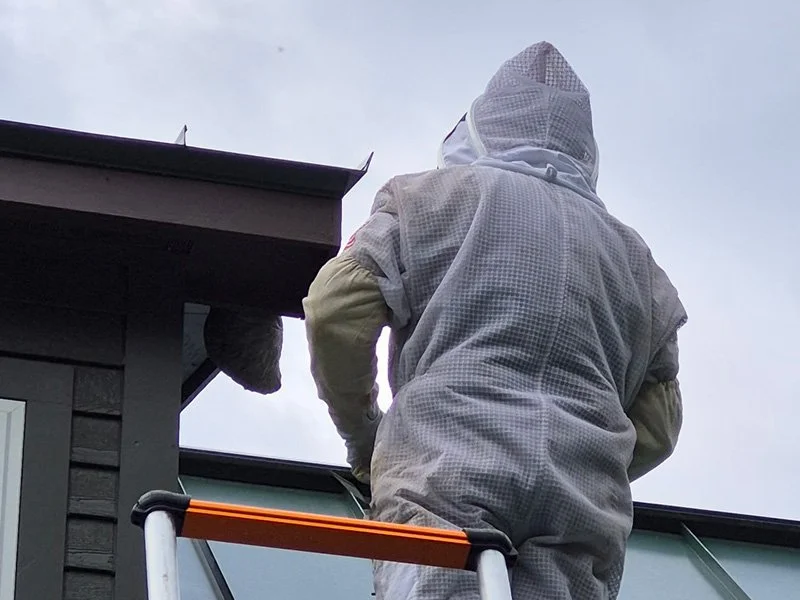
Bald-Faced Hornets
Despite their name, bald-faced hornets are actually a type of yellow jacket. They're easy to recognize by their black bodies and bold white markings.
These insects build large, enclosed paper nests that often hang from trees, shrubs, utility poles, sheds, and even under roof overhangs. By late summer, some nests can grow nearly as large as a basketball.
Bald-faced hornets are highly protective of their colonies. If a nest is disturbed, multiple hornets may respond at once, making them one of the more aggressive stinging insects found around Maine homes. Homeowners often discover these nests attached to ornamental trees, shrubs, sheds, garages, and the corners of homes during July and August.
Paper Wasps
Paper wasps are among the most common stinging insects around Maine homes. They build small, umbrella-shaped nests that remain open and visible from below.
You'll often find these nests attached to deck railings, porch ceilings, eaves, playsets, sheds, and outdoor furniture.
Paper wasps can help control other insects, but that doesn't make them welcome when they build a nest over your front door, back deck, or favorite place to sit outside. They typically aren't aggressive unless their nest is threatened, but they'll readily defend it if someone gets too close.
Yellow Jackets
When homeowners talk about "aggressive wasps," yellow jackets are usually the culprit.
Yellow jackets frequently build nests underground, inside landscape features, under porches, within retaining walls, and occasionally inside wall voids. Because many nests are hidden, homeowners often don't realize they're nearby until a lawn mower, gardening project, or family activity accidentally disturbs the colony.
By mid- to late summer, colonies can contain thousands of workers. Yellow jackets become particularly noticeable around outdoor meals, trash cans, pet food, and sugary beverages.
They also aggressively defend their nests, especially as colonies grow larger later in the season.
Which Stinging Insects Cause the Most Problems?
Not every stinging insect creates the same level of concern for homeowners.
In our experience, yellow jackets and bald-faced hornets tend to generate the most calls during the second half of summer. Both species build large colonies and can become aggressive when their nests are disturbed.
Yellow jackets are especially challenging because many nests are hidden underground, inside retaining walls, beneath porches, or in other areas where homeowners may not notice them until someone gets too close. Bald-faced hornets often build large, highly visible nests in trees, shrubs, and around structures.
Paper wasps can also become a problem when they build nests above doorways, decks, patios, and other high-traffic areas.
Unlike honey bees that can only sting once, yellow jackets, bald-faced hornets, and paper wasps can sting multiple times. That's one reason nests near doors, decks, play areas, or outdoor gathering spaces should be taken seriously.
Why Stinging Insects Become More Noticeable in July
Most hornet and wasp colonies begin with a single queen in the spring. Throughout May and June, workers gradually expand the nest and care for developing larvae.
By July, those colonies are rapidly expanding. More workers means more insects foraging around your property, which is why homeowners often notice a significant increase in activity during the middle of summer.
One reason stinging insects can seem to appear overnight is that nests often stay small and easy to miss earlier in the season. By July and August, some colonies may contain hundreds or even thousands of insects, making accidental encounters much more likely.
Why Residential Pest Control Makes Sense for Maine Homeowners
Stinging insects are rarely the only pest issue homeowners face during a Maine summer. Many of the same conditions that attract hornets and wasps can also encourage ants, spiders, earwigs, crickets, and other nuisance pests. Rather than dealing with one pest problem at a time, many homeowners choose an ongoing residential pest control program to help protect their homes year-round.
At Advanced Pest Solutions, our Premium Care plan targets 42 common household pests, including the stinging insects we've been discussing. It includes two seasonal services with interior and exterior pest treatments. It also comes with a no-charge service guarantee, so if a covered pest problem develops anytime in between routine visits, we’ll come back out to re-treat at no extra cost.
Every visit gives our technicians an opportunity to look for early signs of pest activity, including new stinging insect nests or conditions that make your property more attractive to pests. Because our team works in these communities every day, we know how quickly stinging insect activity can increase once colonies become established.
Whether you live in Lewiston, Auburn, Belgrade Lakes, Rockland, Boothbay Harbor, Farmington, or one of the many surrounding communities we serve, having a local pest professional regularly inspect your property can help you stay ahead of seasonal pest problems.
While no preventative service can guarantee that a queen won't attempt to establish a nest somewhere on the property, ongoing treatments can help reduce surprises during the busiest months of the year.
Enjoy Your Yard Without Unwanted Guests
Summer in Maine is short, and we want our customers to enjoy it without worrying about stinging insect nests around their homes.
If you've noticed increased hornet, wasp, or yellow jacket activity around your property, or if you'd like year-round protection from many of the pests that commonly invade Maine homes, Advanced Pest Solutions can help.
Ready to protect your home from stinging insects and other common household pests? As a local company with more than 35 years of industry experience, Advanced Pest Solutions helps homeowners across Central and Coastal Maine stay ahead of seasonal pest problems. Contact us today to learn more about our Premium Care plan.